Yes, Americans can buy property in the Dominican Republic with the same rights as local citizens. There is no law that blocks foreign buyers from owning land, condos, or beachfront homes anywhere on the island. This makes it one of the easiest Caribbean markets for US buyers who want a vacation home or rental investment. If you plan for Americans buy property in this country, you will find the process simpler than buying in many US states.
The Dominican Republic welcomes foreign investment because tourism and real estate drive a huge part of its economy. You do not need residency, a local partner, or special permission to close on a home here. Many buyers work with a local Sosua real estate listings agent or a broker in Punta Cana to handle paperwork and title checks. This guide breaks down costs, legal steps, and the best areas so you can buy with confidence.
Dominican Republic Property Price Comparison
Before you commit to a neighborhood, compare what your budget gets you across the most popular buyer areas. Prices below reflect typical market ranges for 2024 and 2025 listings.
| Area | Property Type | Price Range (USD) | Estimated Rental ROI |
| Punta Cana | Beachfront condo | $120,000 to $350,000 | 6% to 9% |
| Sosua | Ocean view villa | $180,000 to $500,000 | 5% to 8% |
| Cabarete | Studio condo | $90,000 to $200,000 | 6% to 10% |
| Las Terrenas | Boutique villa | $200,000 to $600,000 | 5% to 7% |
| Santo Domingo | City apartment | $80,000 to $250,000 | 4% to 6% |
These numbers shift with location, view, and finish quality. A unit inside Xanadu Resort Residences will price higher than a similar unit a few blocks inland because of amenities and beach access.
How Americans Buy Property in the Dominican Republic Step by Step
The buying process here follows a clear legal path that protects both parties. You do not need to be a resident or citizen to hold a title deed in your own name.
Step 1: Hire a Local Attorney
You need a Dominican real estate attorney who is separate from the seller’s lawyer. This person checks the Certificado de Título (title certificate) for liens, debts, or ownership disputes before you sign anything.
Step 2: Sign a Reservation Agreement
Once you pick a property, you sign a short reservation contract and pay a small deposit, usually 5% to 10%. This takes the listing off the market while your lawyer finishes due diligence.
Step 3: Sign the Promise of Sale
This is a binding contract that spells out price, payment schedule, and closing date. Most buyers pay 30% to 50% at this stage, especially for pre construction units.
Step 4: Close and Register the Title
At closing, you pay the remaining balance and transfer taxes. The government then issues a new title deed in your name, which is recorded at the local Title Registry Office.
Legal Requirements for Foreign Buyers
Foreign buyers face almost no restrictions when purchasing homes here. The Dominican Republic real estate law treats American buyers the same as local citizens in nearly every case.
Key points to know:
- No residency or citizenship is required to own property
- You can buy land, houses, condos, or commercial buildings directly in your name
- A US LLC or Dominican corporation can also hold the title if you want extra liability protection
- Financing options exist through local banks, but most Americans use cash or US based lenders
- Property must be registered at the Title Registry Office to be legally valid
One exception applies to land within a set distance of international borders or certain military zones. These restricted areas rarely affect typical beachfront properties in this area that tourists and retirees want.
Costs and Taxes Americans Should Budget For
Closing costs in the Dominican Republic run lower than in many parts of the US, but you still need a full budget. Plan for these expenses beyond the sticker price.
- Transfer tax: 3% of the property value, paid at closing
- Legal fees: 1% to 1.5% of the purchase price
- Annual property tax (IPI): 1% on properties valued over about $172,000, with a tax free threshold below that
- Notary and registration fees: roughly 0.5% to 1%
- HOA or condo fees: vary by building, often $100 to $400 monthly for resort style amenities
Buyers comparing new builds versus older homes should read our guide on new construction vs resale homes in the Dominican Republic to see which option fits their tax and maintenance budget better.
Best Areas for American Buyers
Different coastal towns suit different lifestyles and budgets. Here is a quick breakdown of the top regions for US citizens purchasing DR homes.
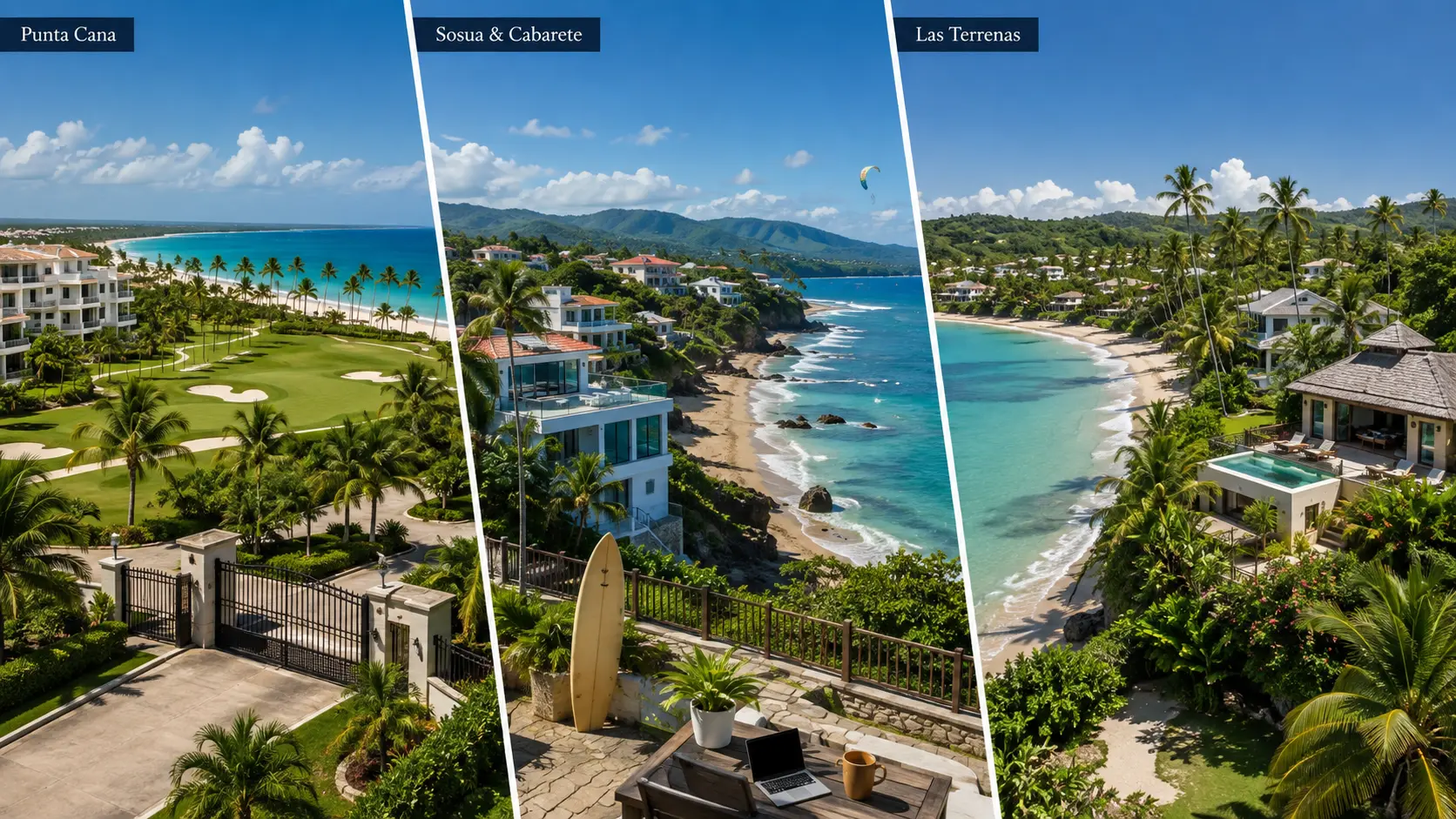
Punta Cana
This region draws the most American buyers because of direct flights, resort infrastructure, and strong rental demand. Gated communities near golf courses and beaches offer steady occupancy for short term rentals.
Sosua and Cabarete
These north coast towns attract a mix of retirees, surfers, and remote workers. Prices stay lower than Punta Cana while still offering ocean views and a walkable expat community.
Las Terrenas
Once a quiet fishing village, this Samana peninsula town now has a strong French and European expat base along with growing American interest. Villas here often sit near the beach at prices below comparable Punta Cana listings.
Santo Domingo
The capital city suits buyers who want year round urban living instead of a resort setting. Apartments here work well for long term rental income from local professionals.
If you want a project with strong community amenities and green space, check out Choco Hills, or browse ocean facing units at Sunset by the Sea for a more coastal lifestyle.
Financing Options for American Buyers
Most Americans pay cash because local bank financing for foreigners comes with higher interest rates and shorter terms. That said, a few paths exist if you need a loan.
- Dominican banks offer mortgages to foreigners at 8% to 12% interest, typically for 50% to 70% of the property value
- Some US lenders offer cross border loans backed by US assets
- Developers selling pre construction units often allow payment plans directly, spreading cost over 12 to 36 months with no bank involved
Working with trusted neighborhood brokers nearby who understand both US and Dominican finance rules helps you avoid overpaying on interest or fees.
FAQs
Can Americans Buy Property in the Dominican Republic Without Residency?
Yes, you do not need residency or citizenship to buy property here. You can hold the title deed directly in your name as a US citizen from day one.
Do Americans Need a Visa to Buy Real Estate in the DR?
No, a tourist visa or standard entry stamp is enough to sign contracts and close on a home. You only need residency status if you plan to live there full time or want certain tax benefits.
Is It Safe for Americans to Buy Property in the Dominican Republic?
Yes, as long as you hire an independent attorney and verify the title before paying any deposit. Title fraud does happen occasionally, so due diligence protects your investment.
How Much Does It Cost to Buy a House in the Dominican Republic?
Prices start around $80,000 for small condos in Santo Domingo and climb past $500,000 for beachfront villas in Sosua or Las Terrenas. Your total budget should also include the 3% transfer tax and legal fees.
Can Foreigners Get a Mortgage in the Dominican Republic?
Yes, local banks lend to foreigners, but rates run higher than US mortgages, usually between 8% and 12%. Many buyers instead use developer payment plans or cash purchases to avoid these rates.
Do I Need a Dominican Corporation to Buy Property?
No, you can buy directly in your personal name without forming a company. Some investors still choose a corporate structure for liability protection or estate planning purposes.
What Taxes Do Americans Pay on Dominican Property?
You pay a one time 3% transfer tax at closing and an annual 1% property tax if the value exceeds the tax free threshold. Rental income earned from the property is also subject to Dominican income tax rules.
Conclusion
Buying real estate in this Caribbean nation is far less complicated than most first time buyers expect. The legal system protects foreign ownership, the paperwork follows a clear four step process, and costs stay reasonable compared to similar US coastal markets. Whether you choose a condo in Punta Cana or a villa near Sosua, working with a local real estate agents close by you trust makes the entire transaction smoother. For most people asking whether Americans buy property successfully here, the answer comes down to good legal advice and a clear budget.
Start by comparing a few neighborhoods, get pre approved if you need financing, and always hire your own attorney before signing a deposit agreement. Visit the properties in person when possible, since photos rarely capture the full picture of noise, road access, or building quality. Once your title clears and taxes are paid, you own a legal, registered piece of Dominican real estate just like any local citizen. With the right team behind you, the path from search to closing can take as little as 60 to 90 days.