by
by 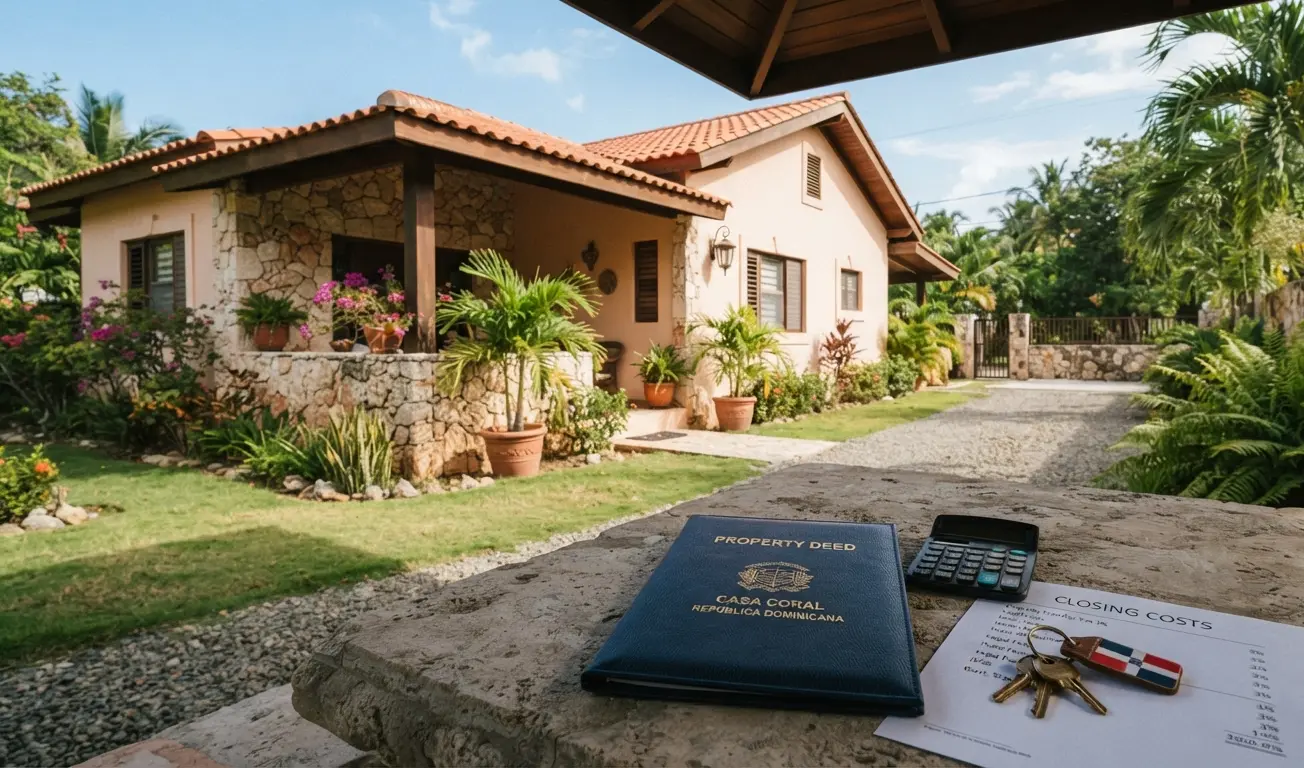
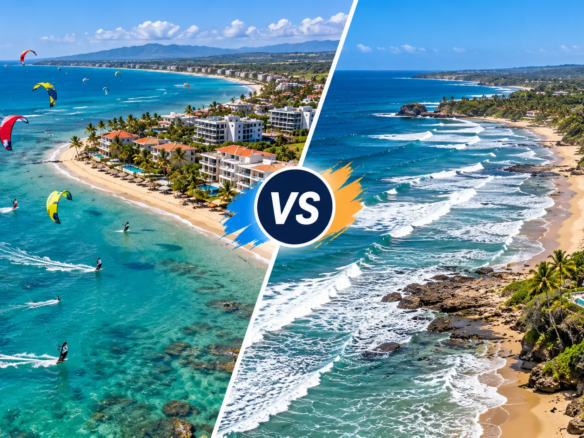
Closing costs when buying property in the Dominican Republic typically run between 3% and 4% of the purchase price, covering the title transfer tax, legal fees, and registration charges. Buyers in Punta Cana, Sosua, Cabarete, and Las Terrenas all pay similar rates, since these costs are set by national law, not local custom. This guide breaks down every fee you’ll face, from the 3% transfer tax to notary charges, so you know your total budget before you sign anything. Whether you’re buying a condo in Bavaro or a villa near Cabarete beach, these numbers apply the same way.
Most buyers underestimate these costs because Dominican real estate ads rarely mention them. A $200,000 condo can carry $6,000 to $8,000 in extra fees beyond the sticker price. That’s why working with a broker who explains closing costs when buying property in the Dominican Republic upfront saves you from budget surprises. This article covers taxes, legal fees, timelines, and the exact steps your attorney will walk you through.
Closing Cost Breakdown
Here’s a quick snapshot of typical property purchase fees in the Dominican Republic, based on a sample $200,000 purchase.
| Cost Item | Typical Rate | Estimated Amount ($200,000 property) |
| Title Transfer Tax | 3% of property value | $6,000 |
| Legal/Attorney Fees | 1% – 1.5% | $2,000 – $3,000 |
| Title Registration | Flat fee | $150 – $500 |
| Notary Fees | 0.5% – 1% | $1,000 – $2,000 |
| Property Appraisal | Flat fee | $200 – $400 |
| Annual Property Tax (IPI) | 1% (on value over $175,000 threshold) | Varies by property value |
| Total Estimated Closing Costs | 3% – 4% | $6,000 – $8,000 |
These costs should be calculated against the specific property being purchased rather than treated as one fixed amount. Buyers reviewing Infiniti Blu condominiums, for example, should establish the applicable purchase and assessed values before finalizing their closing budget.
The same principle applies when budgeting for resort-style developments such as Xanadu Resort in Puerto Plata, because buyers should calculate transaction expenses together with the actual property price and contract terms rather than looking only at the advertised purchase price.
Total Cost of Buying Property in Punta Cana and Beyond
The biggest single expense is the title transfer tax, set at 3% of the government-assessed property value. This tax applies whether you’re buying a beachfront condo in Bavaro or a hillside home in Sosua, so it pays to compare the best places to buy property in the Dominican Republic for investment before you commit to one region.
Your closing attorney submits this payment directly to the Dirección General de Impuestos Internos (DGII), the Dominican tax authority. Skipping this step means your title never officially transfers into your name.
Legal fees come next, usually between 1% and 1.5% of the purchase price. This covers your attorney’s work reviewing the sales contract, checking the property title at the Title Registry Office (Registro de Títulos), and confirming there are no liens or debts attached. In areas like Cabarete and Las Terrenas, where foreign buyers make up a large share of the market, hiring a bilingual real estate attorney is standard practice.
Legal Fees, Notary Charges, and Government Registration Costs
Notary fees in the Dominican Republic cover the certification of your purchase contract and other legal documents. These typically run 0.5% to 1% of the sale price, depending on the notary and the complexity of the deal. A notary here plays a bigger legal role than in the U.S., they verify signatures, confirm identities, and make sure the contract meets Dominican civil code standards.
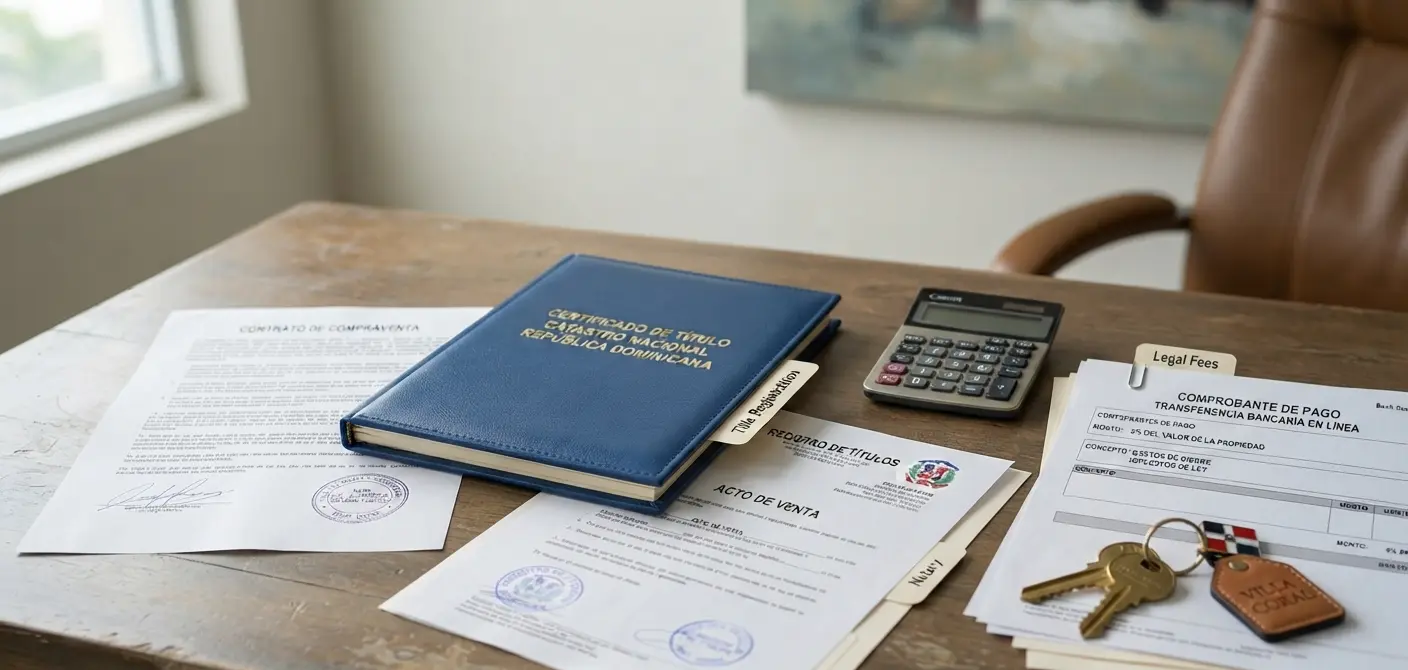
Registration costs cover filing your new Certificate of Title with the government. This is a flat fee, usually a few hundred dollars, but it’s a required step. Without it, your ownership isn’t legally recorded, even if you’ve paid for the property in full.
Additional Fees Buyers Often Miss
- Bank transfer fees: Wiring funds internationally can cost $30-$75 per transaction.
- Due diligence fees: Title searches and property surveys run $200-$500.
- Homeowners association (HOA) setup fees: Common in gated communities near Punta Cana and Bavaro.
- Currency exchange spread: Converting USD to Dominican pesos can add hidden costs if not planned for.
Annual Property Tax and Ongoing Costs After Closing
Once you close, you’ll face the annual IPI property tax (Impuesto al Patrimonio Inmobiliario). This tax is 1% of the property’s assessed value, but only on the portion above roughly $175,000 (the threshold adjusts yearly for inflation). If you buy through a corporation rather than as an individual, tax rules shift slightly, so ask your attorney which structure fits your situation.
Many buyers exploring beachfront properties in this area also budget for HOA fees, property management, and insurance. These aren’t closing costs, but they affect your total ownership expense from year one.
How Buyers in Sosua, Cabarete, and Las Terrenas Handle Payment Timing
Most sales contracts require a deposit of 10% to 30% at signing, with the remaining balance due at closing. The closing process typically takes 30 to 60 days after the contract is signed, depending on how quickly the title search and due diligence are completed. Buyers working with trusted neighborhood brokers nearby may also have an easier time navigating the process because local agents are familiar with area-specific property and transaction requirements.
For buyers considering Choco Hills in Sosua, it is important to review the required deposit, construction payment milestones, and final balance alongside the normal closing costs. This gives buyers a clearer picture of how much cash will be needed at each stage of the purchase.
The same planning is useful when comparing pre-construction opportunities in Cabarete. Buyers interested in Sunset by the Sea residences should consider the project’s payment schedule together with transfer taxes, legal fees, registration costs, and the amount due before completion.
Buyers looking at Blu Terrenas in Las Terrenas should follow the same approach by reviewing the property’s payment terms alongside expected closing expenses. Understanding both the scheduled property payments and transaction costs can make it easier to plan the total cash required before ownership is transferred.
If you are financing the purchase through a Dominican bank instead of paying cash, allow additional time for the transaction. Bank approval, property appraisal, and related financing steps can extend the overall closing timeline to 90 days or more.
Steps Your Attorney Follows Before Closing
- Confirm the seller’s title is free of liens at the Title Registry Office.
- Draft and review the promise-to-purchase contract.
- Verify property taxes are paid up to date.
- Calculate and prepare payment of the transfer tax.
- Register the new title in your name.
For a full walkthrough of pricing and neighborhood comparisons, check out this detailed guide on the cost of buying property in the Dominican Republic, which breaks down purchase prices by region.
Why Local Expertise Matters When Budgeting for Closing Costs
Every closing has small variables, the notary you choose, whether the property is new construction or resale, and whether you’re buying through a corporation. A broker familiar with local Sosua real estate listings and the Punta Cana market can flag these differences before you sign a contract, not after. This is where closing costs when buying property in the Dominican Republic become predictable instead of a surprise line item at the notary’s office.
If you’re comparing regions, it helps to look at listings across the country first. Browse current options through Dominican Republic property listings to see how prices and fees shift between Punta Cana, Sosua, and Las Terrenas.
FAQs
Are closing costs negotiable in the Dominican Republic?
No, the title transfer tax and government registration fees are fixed by law. Legal and notary fees can sometimes be negotiated, especially on higher-value properties, but taxes themselves are not flexible.
Do foreigners pay higher closing costs than Dominican citizens?
No, foreign buyers pay the same transfer tax rate and legal fees as Dominican nationals. The Dominican Republic doesn’t apply extra taxes based on citizenship status when buying real estate.
How much are closing costs on a $300,000 property in Punta Cana?
Expect roughly $9,000 to $12,000 in total closing costs on a $300,000 property, based on the standard 3% to 4% rate. This includes the transfer tax, legal fees, notary charges, and registration.
Can closing costs be included in a mortgage?
Yes, some Dominican banks allow buyers to roll a portion of closing costs into their financing. This varies by lender, so ask your bank or broker before assuming this option applies to your loan.
Is a lawyer required to close on Dominican Republic real estate?
Yes, Dominican law requires a licensed attorney to handle title transfer and contract review. Buyers should hire their own independent attorney rather than relying solely on the seller’s lawyer.
What happens if the seller has unpaid property taxes?
Your attorney checks tax records during due diligence, and any unpaid taxes are usually settled from the seller’s proceeds before closing. This protects the buyer from inheriting the seller’s tax debt.
How long does closing take on a resale property versus new construction?
Resale properties typically close in 30 to 60 days once the title check is complete. New construction can take longer, since the developer may still be finalizing the individual title for your unit.
Conclusion
Understanding closing costs when buying property in the Dominican Republic before you make an offer protects your budget and avoids last-minute stress. Between the transfer tax, legal fees, notary charges, and registration costs, plan for roughly 3% to 4% on top of the purchase price. These numbers stay consistent whether you’re buying near the beach in Bavaro or inland closer to Sosua. Working with an attorney and broker who explain each fee line by line makes the entire process far less confusing.
Buyers who plan ahead avoid the common mistake of running short on cash at the notary’s desk. Set aside your closing budget early, confirm which fees your bank or developer might cover, and ask for a written cost breakdown before signing anything. If you want help estimating your total investment, connect with Closing Costs When Buying Property in the Dominican Republic specialists who work with buyers across Punta Cana, Sosua, and Las Terrenas daily. A clear budget upfront means a smoother path to owning your property in the Dominican Republic.