by
by 
The fastest way to invest in a cheap condo Dominican Republic is to buy pre-construction units in growing beach towns before prices rise. Many buyers get a one-bedroom unit for under $90,000 in areas outside the main tourist strip. Prices stay low because the country still has room to grow, unlike Mexico or Costa Rica. This guide breaks down real numbers, real neighborhoods, and real steps so you don’t overpay.
Buying property abroad feels risky if you don’t know the local rules. The Dominican Republic lets foreigners own real estate with the same rights as citizens, which removes a major barrier. This article covers pricing by region, legal steps, financing, and the mistakes that cost buyers thousands. By the end, you’ll know exactly where to look and what to pay.
Condo Prices by Region
Before you buy a condo in Dominican Republic, compare what your money gets in each area. Prices swing a lot depending on distance from the beach and how developed the town is. You can check current listings across Dominican Republic real estate to see how prices shift by season.
| Region | Avg. Price (1BR) | Avg. Price (2BR) | Distance to Beach |
| Punta Cana / Bavaro | $110,000 | $180,000 | 5-15 min |
| Las Terrenas | $95,000 | $150,000 | 5-10 min |
| Puerto Plata | $75,000 | $120,000 | 5-20 min |
| Cabarete | $85,000 | $135,000 | 5-10 min |
| Santo Domingo (city) | $70,000 | $110,000 | N/A |
Puerto Plata and Santo Domingo offer the lowest entry prices right now. Punta Cana costs more but rents out faster to tourists.
Why Puerto Plata and Cabarete Beat Punta Cana on Price
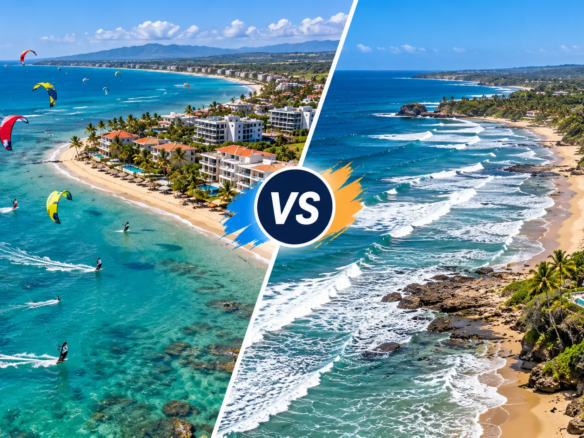
Punta Cana gets the most attention, so land and construction cost more there. Puerto Plata and Cabarete sit on the same coastline but haven’t caught up in price yet.
- Puerto Plata: older infrastructure, lower taxes, growing airport traffic
- Cabarete: known for kitesurfing, strong short-term rental demand
- Both areas: smaller crowds, easier resale to locals
Best Areas for a Condo for Sale Dominican Republic Buyers Should Know
A condo for sale Dominican Republic listings site shows dozens of towns, but only a handful make sense for investors. Stick to areas with airports, hospitals, and steady tourism.
- Bavaro: Best for rental income near Punta Cana’s airport. Browse current condos for sale in Punta Cana to see live pricing.
- Las Terrenas: French and European buyer base, strong resale value
- Cabarete: Digital nomad crowd, year-round bookings
- Sosua: Cheapest beach town with expat infrastructure already built
- Santo Domingo: Best for long-term tenants, not vacation rentals
Each area has its own buyer type. Match your goal (rental income vs. personal use) to the town before you shop for units. Use our advanced property search to filter by price, bedrooms, and beach distance.
Steps to Buy a Condo in Dominican Republic
You don’t need residency or citizenship to purchase property there. Foreign buyers follow almost the same process as locals, with only a few extra checks along the way.
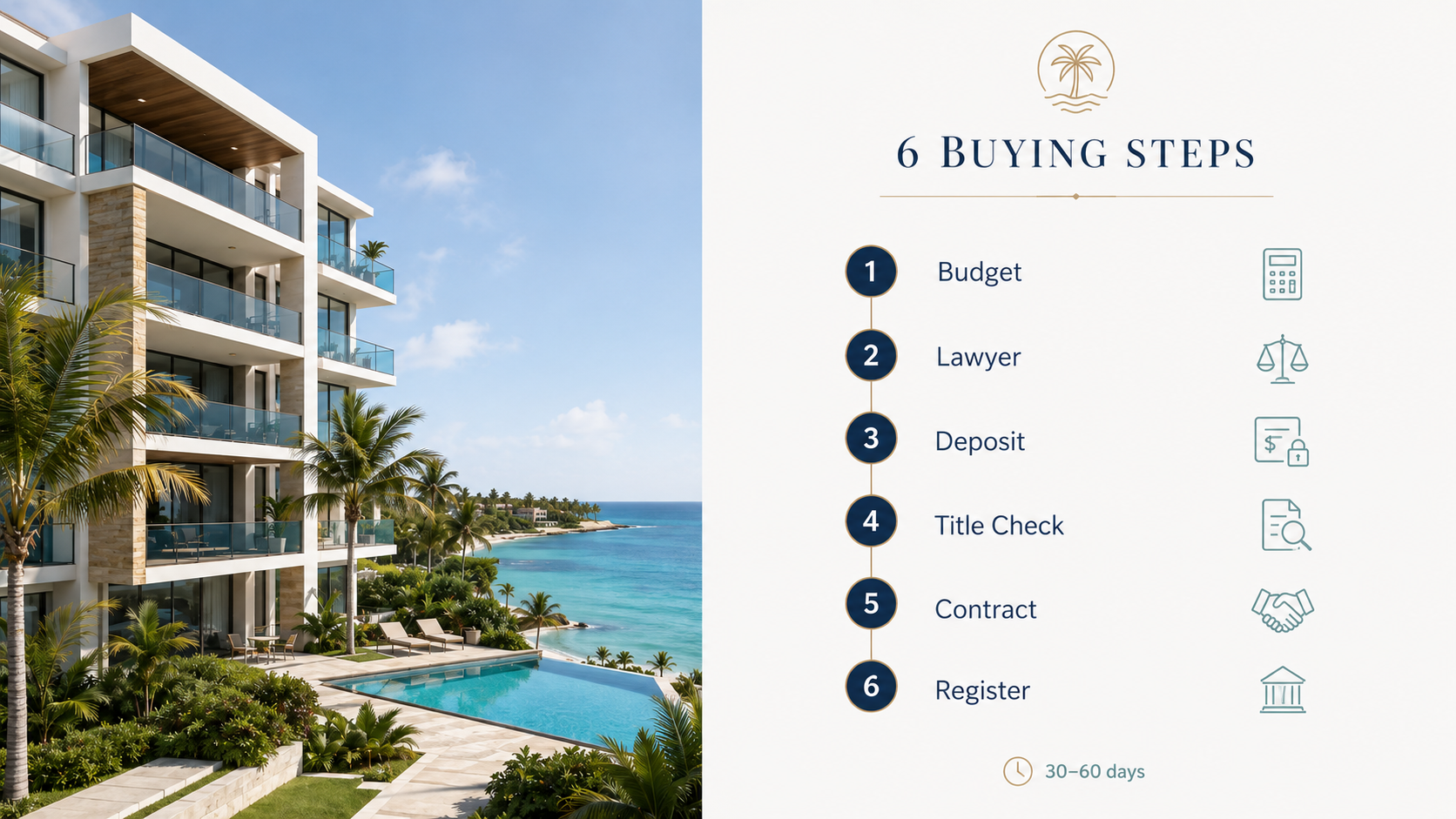
- Pick your budget and target area
- Hire a local real estate lawyer (not the developer’s lawyer)
- Sign a reservation contract and pay a deposit (usually 10%)
- Complete a title search at the Title Registry Office
- Sign the final purchase contract (Contrato de Venta)
- Pay the 3% transfer tax and register the title in your name
The whole process usually takes 30 to 60 days for resale units. Pre-construction deals can take longer since you’re paying in stages tied to building progress. Our licensed local team handles title checks and contract review for foreign buyers at every step.
Do You Need a Lawyer to Buy Property in the DR?
Yes, you need a lawyer, and it’s not optional in practice. A good lawyer checks the title, confirms the seller owns the property free and clear, and makes sure your contract protects your deposit.
Financing Options for a Condo in Dominican Republic Punta Cana
Most buyers looking at a condo in Dominican Republic Punta Cana pay cash or use developer financing, since local mortgages for foreigners come with high rates. Banks in the DR often charge 9-12% interest to non-residents, which eats into rental returns fast.
- Developer financing: 30-40% down, rest paid over 1-3 years, no bank needed
- Cash purchase: Fastest closing, often gets you a 5-10% discount
- US home equity loan: Some buyers tap equity back home instead of a DR mortgage
- Local bank loan: Possible but slow, needs DR bank account and income proof
Developer financing is the most common path for first-time buyers. It skips the bank entirely and locks in your price at today’s rate.
Hidden Costs Buyers Forget
The listing price is never the full price. Budget extra for these costs before you close:
- Transfer tax: 3% of the property value
- Legal fees: 1-1.5% of purchase price
- HOA fees: $50-$200 monthly depending on amenities
- Property tax (IPI): 1% annually on value above $175,000 (2026 threshold)
- Closing costs: roughly 1-2% total
Add these up and expect 5-7% on top of the sale price. Sellers rarely mention this upfront.
Common Mistakes When You Buy Condo in Dominican Republic
When buyers purchase units without checking the paperwork, problems often show up later. Here are the mistakes that cost people the most money.
- Skipping the title search and trusting the developer’s word
- Buying pre-construction from a builder with no finished projects yet
- Ignoring HOA fees until after closing
- Not checking flood zones or beach erosion history
- Using the seller’s lawyer instead of your own
A rushed purchase almost always costs more in year two. Take the extra week to verify paperwork.
Is a Cheap Condo Dominican Republic Purchase Actually Worth It?
Yes, if you buy in the right area and check the title first, a cheap Condo Dominican Republic can pay for itself through rental income within 8-12 years. Tourist numbers keep climbing, especially in Punta Cana and Las Terrenas, which keeps short-term rental demand steady.
Returns depend heavily on location and management. A well-managed unit near the beach can hit 6-9% gross rental yield, while inland units may only reach 3-4%.
FAQs
Is It Safe to Buy Property as a Foreigner in the Dominican Republic?
Yes, foreigners have the same property rights as citizens under Dominican law. You don’t need residency, a local partner, or special permission to own a condo outright.
How Much Does a Condo Cost on Average in the Dominican Republic?
Buyers can expect to pay between $70,000 and $180,000 depending on the region and size. Beachfront units in Punta Cana sit at the higher end, while Puerto Plata and Santo Domingo tend to be more affordable.
Can I Rent Out My Condo Through Airbnb?
Yes, short-term rentals are legal in most tourist zones across the country. Check your HOA rules first, since some buildings restrict rental length or require you to use their management company.
Do I Need Dominican Residency to Own Property?
No, residency is not required to buy or own real estate here. Many owners visit only a few weeks a year and rent the rest of the time through a local property manager.
What’s the Best Time of Year to Buy?
Prices and negotiating power shift slightly in the low season, roughly May through October. Fewer buyers are shopping then, which sometimes gives you more room to negotiate on price.
Conclusion
Buying a condo dominican republic doesn’t require huge capital or complicated paperwork if you follow the right steps. Puerto Plata, Sosua, and inland Santo Domingo offer the lowest entry prices, while Punta Cana and Las Terrenas bring stronger rental demand. A local lawyer, a clean title search, and a realistic budget for hidden costs will protect you from the mistakes that trip up first-time buyers. The math works best when you match the town to your goal, whether that’s rental income or a personal beach home.
Start by comparing listings in two or three towns instead of focusing on just one. Talk to a licensed local agent who can pull recent sale prices, not just asking prices. Check the developer’s track record before putting money into anything still under construction. With the right groundwork, your first purchase can turn into a steady income property within a few years.