by
by 
Dominican Republic Beachfront Real Estate is safest to buy when you choose the right coastal area, check the title, confirm the full cost, and use local legal help before paying. A beach home can be used for holidays, rental income, retirement, or long-term living. The best choice is not always the cheapest or the closest to the water. It is the property with clear papers, fair pricing, safe access, and costs you can manage.
A beachfront condo, villa, or beach house in the Dominican Republic can be a strong lifestyle purchase when the numbers make sense. Buyers should look at the beach, the building, the area, the monthly fees, and the resale value. Popular places like Punta Cana, Puerto Plata, Sosúa, Cabarete, Las Terrenas, Samaná, Bayahibe, and La Romana all suit different buyers. A calm review before signing can protect your money and make the buying process easier.
| Cost or Rule | Typical Figure | What Buyers Should Do |
| Transfer tax | 3% | Confirm the tax base with your lawyer before closing |
| Transfer-related expense estimate | Around 3.1% | Keep extra room for small registry or payment costs |
| Annual IPI property tax | 1% | Usually applies only when taxable property value passes the current limit |
| Mortgage or lien registration | 2% | Relevant when a mortgage or lien must be registered |
| Title registry timing | Around 45 working days | Ask your lawyer to track the transfer after closing |
Dominican Republic Beachfront Real Estate for Real Beach Living
Beachfront living in the Dominican Republic is about more than a sea view. It is about daily beach access, warm weather, local services, and a property that fits your real use. Some buyers want a vacation home. Others want rental income or a place for retirement.
A good beach property should match one clear goal:
- Family holidays
- Winter home
- Short-term rental
- Retirement living
- Long-term coastal investment
- Future resale value
Buyers from the U.S., Canada, Europe, and other markets often look at the Dominican Republic because it offers Caribbean beaches, resort towns, and a wide mix of condos and villas. Still, beach property needs more care than inland property. Salt air, humidity, and storm exposure can affect the building over time.
True Beachfront vs Ocean View Property
A true beachfront means the property sits directly by the beach or has direct access to the sand. Ocean view means you can see the water, but the property may be across a road, behind another building, or higher up the hill. Near-beach means the property is close to the beach but not directly on it.
These words matter because they affect price and use:
- Beachfront: Best for direct beach access
- Oceanfront: Usually faces the sea
- Ocean view: Good view, but not always direct access
- Beach access: A route to the beach
- Near beach: Close to the beach, usually lower cost
- Gated community: Shared security, rules, and monthly fees
Before making an offer, ask how many steps it takes to reach the sand. Ask if the access is public, shared, or part of the property. Also check if future buildings nearby could block the view.
Best Areas for Beachfront Buyers
Each coastal area has a different feel. The best area depends on your budget, rental plan, lifestyle, and how often you will use the home. A buyer who wants strong tourism may choose a different area than a buyer who wants a quiet beach town.
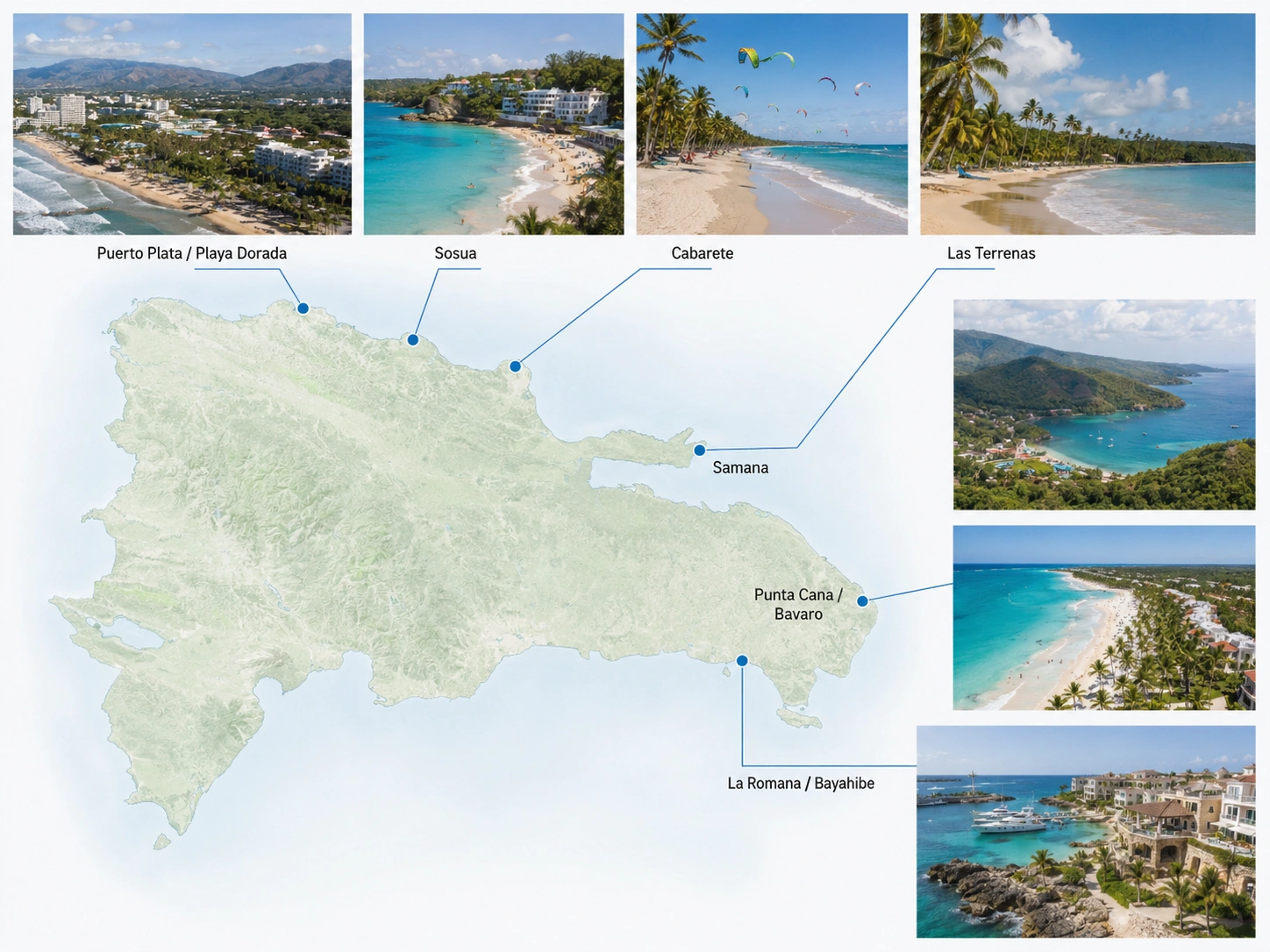
- Punta Cana and Bávaro suit buyers who want resort-style living, gated communities, beaches, and strong tourist traffic. Areas like Los Corales and El Cortecito can appeal to buyers who want beach access and rental demand. This market may be good for condos and vacation rentals. Prices can be higher in prime zones.
- Puerto Plata and Playa Dorada can suit buyers who want coastal value with city services nearby. This area has beaches, restaurants, shops, and airport access. It may work for buyers who want a more local feel than a full resort zone. Condos and homes can vary widely by condition.
- Sosúa is often considered by buyers looking at condos, beach-town living, and rental use. It has restaurants, services, and a long history with foreign buyers. It can suit people who want a smaller town with active rental options. Building rules should still be reviewed.
- Cabarete suits active beach buyers. It is known for water sports, beach restaurants, and a social coastal lifestyle. Condos near the beach may work for personal use and short stays. Noise, parking, and building rules should be checked.
- Las Terrenas can suit buyers who want a slower beach lifestyle. It has beaches, restaurants, and a more relaxed coastal feel. Some buyers like it for long stays rather than only short holidays. Road access and management support should be reviewed.
- Samaná can work for buyers who want nature, quieter beaches, and privacy. It may suit people who value scenery and calm surroundings. Some areas have fewer services than major tourist towns. That should be part of the buying decision.
- La Romana and Bayahibe can suit buyers who want a polished coastal setting. La Romana is known for higher-end communities, while Bayahibe has beach and diving appeal. These areas may work for villas, condos, and vacation homes. Fees, access, and community rules need review.
Beachfront Condos, Villas, and Homes
Beachfront condos are often easier for foreign buyers to manage. The building may handle pools, shared areas, security, gardens, and outside care. This helps if you live outside the country. The tradeoff is monthly condo fees and rental rules.
Condos may suit buyers who want:
- Lower maintenance
- Easier lock-and-leave use
- Shared security
- Shared pool or beach access
- Rental support in some buildings
Beachfront villas give more privacy and space. A villa may work better for families, long stays, and premium rentals. It can also give more control over furniture, pool, parking, and guest use. The owner usually handles more repairs and upkeep.
Villas may suit buyers who want:
- Private pool
- More bedrooms
- More outdoor space
- Better privacy
- Stronger family use
- Higher guest capacity
Beach houses can feel more local and personal. Some are simple homes near the sand, while others are built for rentals. The main points are condition, access, title, and monthly cost. A low price can still be expensive if the property needs major repairs.
Cost of Buying Beachfront Property
The full cost is more than the purchase price. A buyer should plan for taxes, legal fees, monthly fees, insurance, repairs, furniture, and management. Beachfront homes may also need more upkeep because of salt air and humidity. A clear budget makes the deal safer.
Costs to include:
- Purchase price
- Transfer tax
- Lawyer fee
- Notary or registry costs
- Condo or community fees
- Insurance
- Repairs
- Furniture and appliances
- Internet and utilities
- Cleaning and guest setup
- Property management
A beachfront condo may have higher monthly fees but lower personal repair work. A villa may have no condo fee, but the owner pays for pool care, garden care, roof work, and outside maintenance. Compare total yearly cost, not only the listing price.
Foreign Buyers and Property Ownership
Foreign buyers can generally buy property in the Dominican Republic. Many buyers purchase condos, villas, homes, and land in coastal areas. The key point is to use proper legal support. Do not send large payments before the documents are reviewed.
A lawyer should review:
- Title
- Seller ownership proof
- Purchase agreement
- Tax status
- Pending debts
- Condo rules
- Closing documents
- Title transfer process
Some buyers purchase in their personal name. Others may ask about a company structure if they plan to rent, resell, or hold more than one property. This is a legal and tax decision, so it should be reviewed before signing.
Things to Review Before Making an Offer
Before making an offer, check the property and the papers together. A beach home can look attractive but still have legal, repair, or access issues. The goal is to know the risk before paying a deposit. A good seller should be able to answer basic questions.
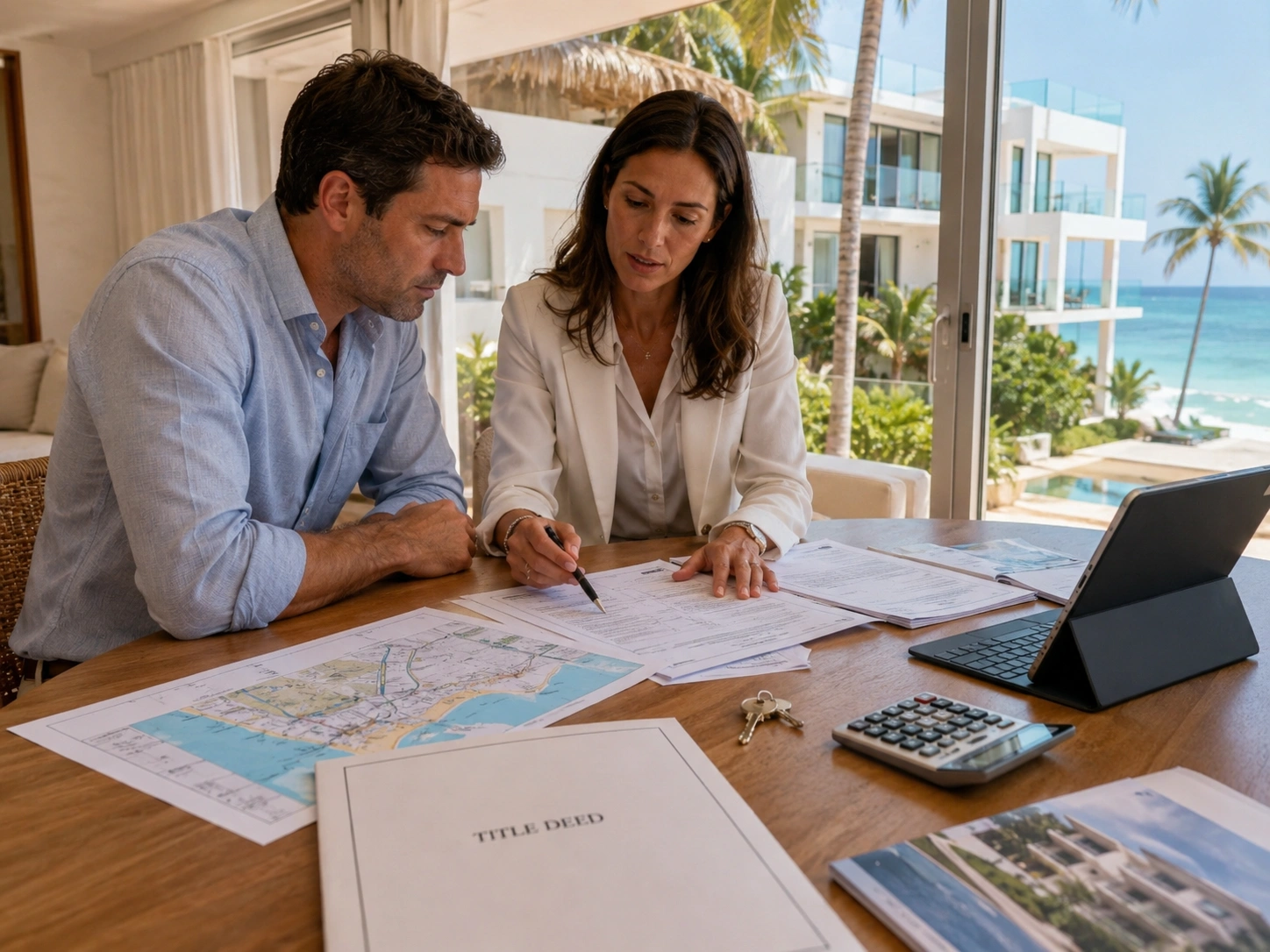
Review these items first:
- Clear title
- Seller name and ID
- Property survey
- Exact boundaries
- Beach access route
- Road access
- Building condition
- Roof condition
- Water and electricity setup
- Condo fees
- Rental rules
- Pending dues
- Furniture included in the sale
The offer should clearly state the price, deposit, closing date, due review period, and what is included. If furniture, appliances, or rental bookings are included, put them in writing. Verbal promises can create problems later.
Beachfront Property Maintenance
Beach homes need regular care. Salt air can damage metal, paint, locks, appliances, window frames, and railings. Humidity can cause moisture, mold, and wall damage. Strong rain and sun can wear down roofs and outside areas.
Before buying, look closely at:
- Roof
- Windows
- Sliding doors
- Paint
- Railings
- Plumbing
- Electrical panel
- Air conditioning
- Drainage
- Moisture signs
- Pool system
- Outdoor tiles
Condos may cover some outside work through monthly fees. Villas usually need more direct owner care. Ask for past repair records if they are available. A home that looks clean today may still need costly work next year.
Rental Income from Beachfront Homes
Rental income can be useful, but it should be planned with real numbers. Dominican Republic Beachfront Real Estate may rent better when it has strong beach access, good photos, reliable internet, safe check-in, and nearby restaurants or attractions. High season and low season can change bookings. Empty months should be included in the budget.
Before buying for rental use, ask:
- Are short-term rentals allowed?
- Are there condo or community limits?
- Who will manage guests?
- Who handles cleaning?
- What are similar homes charging?
- What are the platform fees?
- What are the utility costs?
- What is the low-season plan?
Rental income is not the same as profit. You must subtract management, cleaning, repairs, utilities, platform fees, taxes, furniture wear, and empty nights. A good rental property should still make sense after these costs.
Main Risks Buyers Should Know
Beachfront property has clear benefits, but it also has risks. The biggest risks are unclear documents, high maintenance, poor access, storm exposure, and overpaying for the view. Some buyers also expect rental income to be steady all year. That can lead to weak planning.
Watch for these warning signs:
- Seller cannot show clear title
- Beach access is unclear
- Building has moisture damage
- Condo fees are unpaid
- Rental rules are not clear
- Repairs are hidden
- Price is far above similar homes
- Deposit terms are too aggressive
- No written agreement
- Buyer is pushed to sign quickly
A safe purchase is not about fear. It is about asking the right questions before the money moves. If answers are missing, slow down.
Step-by-Step Buying Process
A simple process makes the purchase easier. Start with budget, area, and purpose. Then compare properties that match those points. Do not start with only photos.
Use this path:
- Set your full budget.
- Choose your coastal area.
- Shortlist condos, villas, or homes.
- Visit or request a detailed video viewing.
- Compare similar nearby properties.
- Make a written offer.
- Ask a lawyer to review documents.
- Confirm title and tax status.
- Agree on deposit terms.
- Sign closing documents.
- Pay required taxes and costs.
- Complete title transfer.
- Set up utilities, insurance, and management.
The steps may change for pre-construction, resale homes, condos, land, or company-owned property. Keep every main agreement in writing. That keeps the deal clear for everyone.
Mistakes That Can Cost Money
Many buyers lose money because they move too fast. A beach view can make a weak deal look better than it is. The property still needs clear documents, fair pricing, and a real cost plan. A slow decision is often safer than a rushed one.
Avoid these mistakes:
- Buying from photos only
- Paying before legal review
- Ignoring title issues
- Not checking beach access
- Forgetting monthly fees
- Underestimating repairs
- Trusting rental income claims without numbers
- Not comparing local prices
- Skipping insurance questions
- Buying in the wrong area for your lifestyle
Ask simple questions before closing. What will this cost each year? Who will manage it when I am away? Can I rent it legally? Is the title clean? These questions protect the buyer.
Working with a Local Broker
A local broker can help you compare areas, prices, property types, and seller expectations. This is useful when you are not living in the Dominican Republic. A broker can also help you see the difference between true beachfront, ocean view, and near-beach listings. That saves time and avoids poor matches.
A local broker can help with:
- Area guidance
- Property shortlisting
- Price comparison
- Seller communication
- Viewing support
- Offer support
- Local service contacts
- Closing coordination
A broker does not replace a lawyer. The broker helps with market and property guidance. The lawyer handles legal review, title, taxes, and closing papers. Both roles are important.
FAQs
Can foreigners buy beachfront property in the Dominican Republic?
Yes. Foreign buyers can generally buy condos, villas, homes, and land in the Dominican Republic. A lawyer should still review the title and closing papers before payment.
How much does beachfront property cost in the Dominican Republic?
It depends on the area, property type, condition, and beach access. A true beachfront villa usually costs more than an ocean view condo or a near-beach home.
Is beachfront property in the Dominican Republic a good investment?
Yes, it can be a good investment when the location, documents, rental rules, and costs make sense. It should not be treated as guaranteed profit.
Which area is best for beachfront property in the Dominican Republic?
It depends on the buyer. Punta Cana may suit resort buyers, Puerto Plata may suit value buyers, and Las Terrenas or Samaná may suit buyers who want a calmer beach setting.
What is the difference between beachfront and ocean view property?
Beachfront usually means direct access to the sand or water. Ocean view means you can see the sea, but the property may not be directly on the beach.
Can I rent out a beachfront home in the Dominican Republic?
Yes, many owners rent out beach homes. You must check condo rules, community rules, management costs, and local demand before counting on rental income.
Are beachfront condos better than beachfront villas?
It depends on your goal. Condos are often easier to maintain, while villas usually give more privacy, space, and control.
What documents should I review before buying beachfront property?
Review the title, seller ownership proof, purchase agreement, survey, tax status, pending debts, and condo rules. A qualified lawyer should review these before closing.
What extra costs come after buying beachfront property?
Extra costs may include transfer tax, legal fees, condo fees, insurance, repairs, furniture, utilities, cleaning, and property management. Beach homes can also need more upkeep because of salt air and humidity.
Do I need a local broker to buy beachfront property?
No, it is not always legally required. But a local broker can help with area guidance, price comparison, viewings, and seller communication.
Is beachfront property hard to maintain?
It can need more care than inland property. Salt air, humidity, sun, and rain can affect paint, roofs, windows, doors, and metal fixtures.
What mistakes should buyers avoid before closing?
Avoid paying too early, skipping legal review, trusting photos only, ignoring monthly fees, and assuming rental income is guaranteed. A clear review before closing is safer than fixing problems later.
Conclusion
Dominican Republic Beachfront Real Estate can be a smart choice for buyers who want beach living, rental potential, or a long-term Caribbean home. The safest purchase starts with the right location, clean documents, and a budget that includes more than the listing price. Buyers should pay close attention to beach access, property condition, monthly costs, and legal review. A good view is valuable, but a clear deal is more important.
The best beach home is the one that fits your real life. It should work for your visits, your rental plan, your maintenance budget, and your future resale needs. Work with a local broker for area guidance and a lawyer for documents before sending major funds. This gives you a safer path from first viewing to closing.