by
by 
The safest way to buy property in dominican republic as a foreigner is to work with a local real estate team, use an independent lawyer, check the title, and register the sale correctly. Foreign buyers can own real estate in the Dominican Republic, but every property should still be checked before money is released. The main thing is not only choosing a nice condo, villa, or land lot. A careful buyer checks the area, title, taxes, fees, rental rules, and closing process before signing.
The Dominican Republic has strong demand from buyers who want a beach home, retirement place, rental property, or long-term investment. Popular areas include Punta Cana, Cabarete, Sosúa, Puerto Plata, Las Terrenas, Santo Domingo, and Cap Cana. Each area has a different lifestyle, price range, and rental market. This guide explains the process in simple language so buyers can make a clear and safer decision.
| Buyer Goal | Better Area Options | Why It May Fit |
| Vacation home near beaches | Punta Cana, Bávaro, Cap Cana | Strong tourism, resorts, condos, and gated communities |
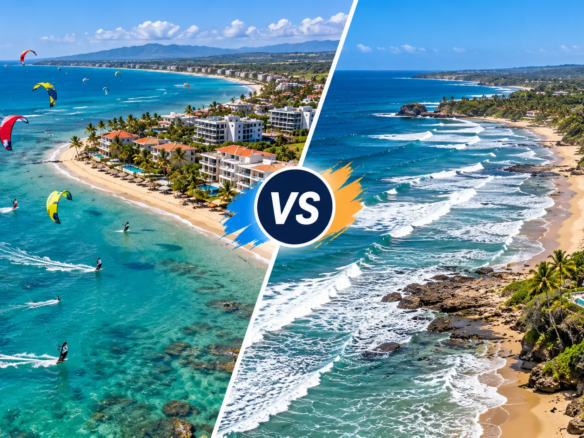
| Kiteboarding and active beach life | Cabarete, Encuentro | Popular with water-sport buyers and short-term rental guests |
| More local feel with coastal value | Puerto Plata, Sosúa | Good mix of villas, condos, services, and expat communities |
| Quiet lifestyle and natural beauty | Las Terrenas, Samaná | Beach town feel, international community, and relaxed pace |
| City living or business use | Santo Domingo | Better for work, services, schools, and year-round local demand |
Foreign buyers and property ownership rules
Foreign buyers can purchase property in the Dominican Republic without needing Dominican citizenship. In many cases, the buyer can own the title in their own name or through a company, depending on their lawyer’s advice and tax plan.
The most important point is due diligence. Your lawyer should check the title certificate, seller identity, property boundaries, liens, unpaid taxes, condo rules, and any rental restrictions.
A good real estate agent helps with areas, listings, offers, and local guidance. A lawyer protects the legal side of the purchase.
Main reasons buyers choose Dominican Republic real estate
Many buyers choose Dominican Republic real estate because it offers beach living, warm weather, direct flights from North America and Europe, and several property types. Some buyers want a personal vacation home. Others want a condo or villa that can also bring rental income.
Common buyer reasons include:
- Beachfront and ocean-view lifestyle
- Condos in resort-style communities
- Villas in gated areas
- Vacation rental demand in tourist zones
- Retirement and seasonal living
- Lower entry prices than some other Caribbean markets
- New developments with modern amenities
A buyer should match the property with the real reason for buying. A retirement home is not always the same as a rental property.
Basic buying process from offer to closing
The buying process usually starts with choosing the property and making an offer. Once the seller accepts, the buyer normally places a deposit based on the agreement terms.
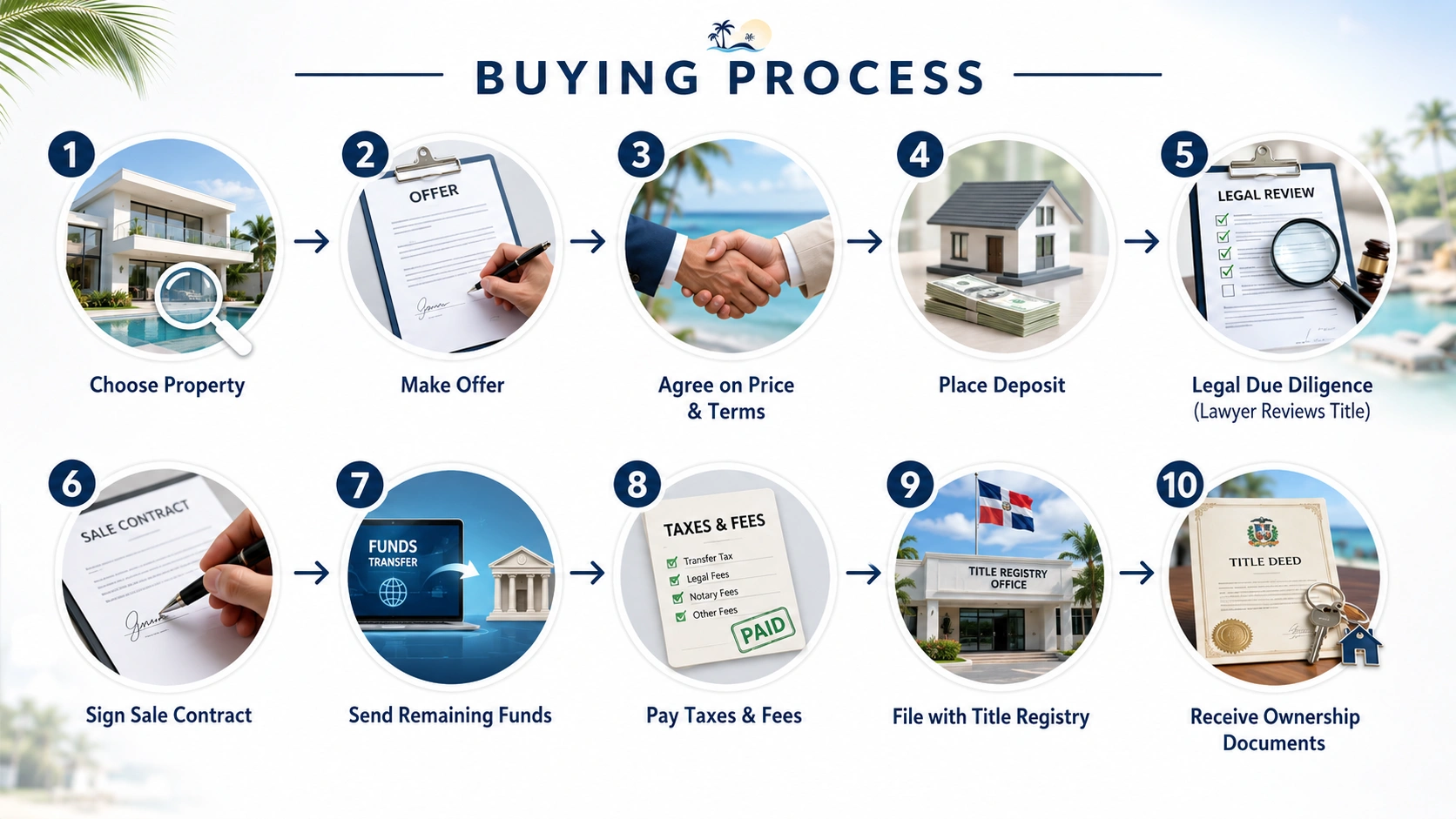
After that, the lawyer checks the legal documents. This stage is very important because it confirms whether the seller can legally sell the property and whether the title is clean.
A simple process often looks like this:
- Choose the right property
- Make an offer
- Agree on price and terms
- Place the deposit as agreed
- Complete legal due diligence
- Sign the Promise of Sale or final sale contract
- Send the remaining funds before closing
- Pay required transfer taxes and fees
- File the sale with the Title Registry Office
- Receive the updated title or ownership documents
Buyers should not rush this process. A slower and cleaner deal is better than a fast deal with missing checks.
Legal checks before signing any deal
Before you buy property in dominican republic, ask your lawyer to check the title, seller documents, unpaid taxes, liens, boundaries, and any existing claims. This is the part that protects the buyer from problems after closing.
For condos and gated communities, the lawyer should also check HOA rules, condo fees, rental rules, building restrictions, and pending maintenance issues. These details can affect both lifestyle and rental income.
For pre-construction property, buyers should check the developer, delivery timeline, payment schedule, penalties, permits, and what happens if the project is delayed.
Costs buyers should expect when they buy property in dominican republic
Buyers should plan for more than the purchase price. The main cost is usually the property price, but closing costs, legal fees, transfer tax, and community fees also matter.
Common buyer costs may include:
- Purchase price
- Lawyer fee
- Transfer tax
- Notary and registration costs
- Bank transfer costs
- Condo or HOA fees
- Property insurance if needed
- Property management fees for rental homes
- Maintenance and repairs after purchase
The real estate transfer tax is commonly around 3% of the property value used by the tax authority or the transaction value, depending on the case. Some approved projects may have tax incentives, so buyers should ask their lawyer to confirm whether any exemption applies.
Cash buying and mortgage financing options
Many international buyers use cash because it can make the closing process simpler. Cash does not always mean physical cash; it usually means the buyer pays through bank transfer.
Mortgage financing may be possible for some foreign buyers. Approval depends on the lender, buyer profile, income documents, down payment, property type, and location.
Some developers may also offer payment plans for pre-construction properties. Buyers should read the payment terms carefully and ask what happens if the project is delayed or the buyer cannot complete payment on time.
Rental income and investment potential
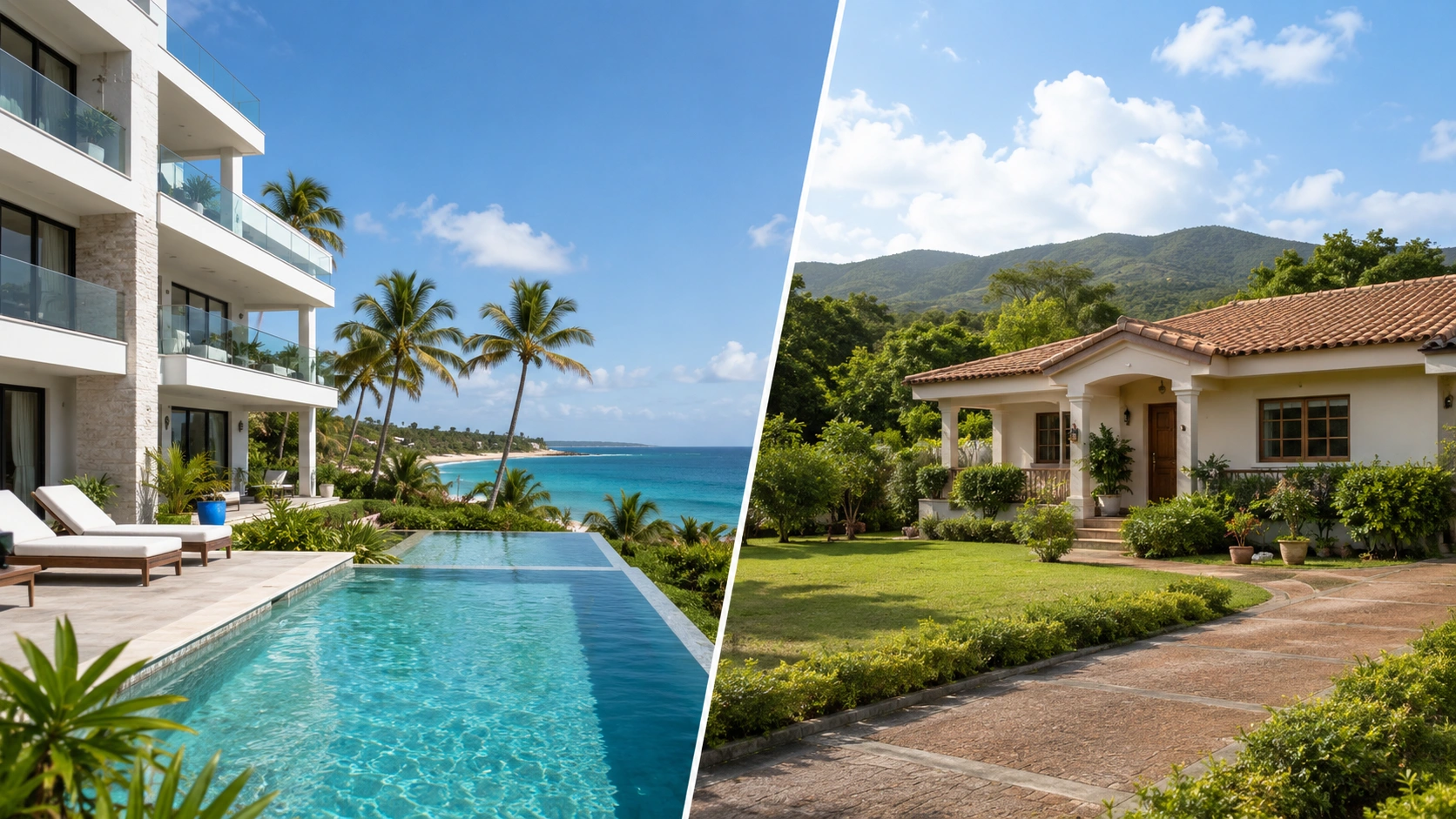
Rental income depends on location, property type, season, condition, management, and demand. A beachfront condo in a tourist area will not perform the same way as a quiet inland home.
Buyers looking for income should check:
- Nightly rental demand
- High and low seasons
- HOA rental rules
- Property management costs
- Cleaning and maintenance costs
- Guest access, parking, and security
- Distance to beach, restaurants, and airport
- Local competition
A good investment is not only about the sale price. It is about net income, resale demand, legal safety, and how easy the property is to manage.
Common mistakes buyers should avoid
A common mistake is buying without a lawyer. A friendly seller, nice photos, or low price does not replace legal due diligence.
Other mistakes include:
- Sending money before documents are checked
- Ignoring title issues
- Not checking unpaid taxes
- Forgetting HOA or condo fees
- Buying land without checking access and permits
- Assuming every property can be rented short term
- Not checking the real condition of the building
- Rushing into pre-construction without reviewing the developer
The safest deal is the one that has clear documents, clear terms, and clear costs.
Practical tips for first-time foreign buyers
Start with your reason for buying. A property for retirement, rental income, family vacations, and resale value may require different areas and different property types.
Keep the process simple:
- Pick one or two target areas first
- Set a real budget with closing costs included
- Use a local agent who knows the area
- Hire an independent lawyer
- Ask for written terms
- Check the title before final payment
- Review all community rules
- Keep extra money for repairs, furniture, and setup
First-time buyers should also spend time in the area if possible. A place can look perfect online but feel different during daily life.
FAQs
Can foreigners own real estate in the Dominican Republic?
Yes, foreigners can own real estate in the Dominican Republic. They should use a local lawyer to check the title, seller documents, taxes, and legal status before closing.
Is real estate safe for foreign buyers in the Dominican Republic?
Yes, it can be safe when the legal process is handled correctly. The main safety step is checking the title, unpaid taxes, liens, and ownership records before sending full payment.
How much are closing costs in the Dominican Republic?
Closing costs usually include transfer tax, lawyer fees, notary costs, and registration-related fees. The final amount depends on the property value and the details of the sale.
Do foreign buyers need a lawyer?
Yes, a lawyer is strongly recommended. The lawyer checks the title, prepares or reviews contracts, confirms the seller’s rights, and helps protect the buyer from legal problems.
What are the best areas for foreign buyers?
Popular areas include Punta Cana, Bávaro, Cap Cana, Cabarete, Sosúa, Puerto Plata, Las Terrenas, and Santo Domingo. The best area depends on whether the buyer wants rental income, beach living, retirement, or city access.
Can foreigners get a mortgage in the Dominican Republic?
Yes, some foreign buyers may qualify for a mortgage. Approval depends on income proof, down payment, lender rules, property type, and buyer profile.
Can owners rent out their home to tourists?
Yes, many owners rent out condos and villas in tourist areas. Before doing this, they should check HOA rules, condo restrictions, local demand, management fees, and seasonal rental trends.
Conclusion
A good purchase starts with the right team and the right checks. Work with a real estate team that understands local areas like Cabarete, Sosúa, Puerto Plata, Punta Cana, Las Terrenas, and Santo Domingo. Use a lawyer who can review the documents before you send major funds. Take time to compare the property, location, costs, and long-term use.
The best time to buy property in dominican republic is when the numbers, documents, and location all make sense. Do not buy only because a unit looks beautiful or the price feels low. A strong property should fit your lifestyle, budget, rental plan, and legal comfort. When these parts are clear, the buying process becomes much easier to manage.